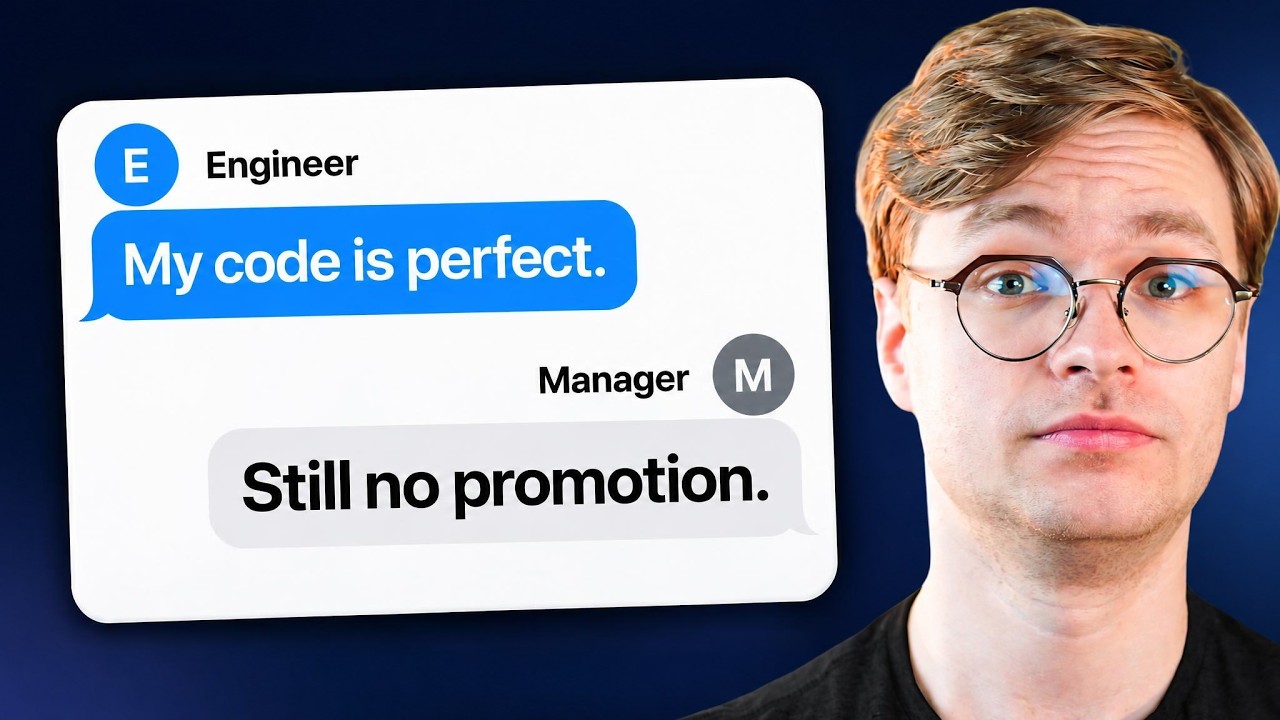
The video explains that while strong coding skills get engineers hired, promotions require adopting high agency by proactively leading projects, communicating effectively with diverse stakeholders, and making work visible beyond the immediate team. It challenges common misconceptions and offers a program to help engineers develop these leadership and communication skills to accelerate their career growth.
The video addresses a common challenge faced by many junior engineers: despite strong technical skills, they struggle to get promoted to senior roles. The speaker shares personal experience of being promoted to senior engineer at GitHub within two and a half years, despite not being the best coder on the team. The key insight is that coding ability gets you hired but does not guarantee promotion. The speaker identifies three mistaken beliefs that hold engineers back and explains how changing these mindsets helped accelerate career growth.
The first mistaken belief is that junior engineers must wait until they are senior to lead projects and that their job is simply to complete assigned tasks. The speaker counters this by sharing how they took initiative to build an AI proof of concept using new technology (RAG) without waiting for approval. This proactive approach, termed “high agency,” involves seeking out and starting new projects independently rather than waiting for direction. The speaker encourages engineers to critically review their recent work and identify opportunities to propose and lead meaningful projects as a first step toward demonstrating high agency.
The second mistaken belief is that communication is solely the manager’s responsibility and engineers only need to focus on coding. The speaker emphasizes that effective communication—explaining projects clearly to both technical and non-technical stakeholders—is crucial for promotion. Using the example of the AI support tool, the speaker shows how demonstrating the tool’s practical benefits to support engineers helped gain their trust and enthusiasm. The advice includes writing clear explanations for code changes and understanding the work deeply to communicate confidently, which also improves interactions with managers and prepares engineers for leadership roles.
The third mistaken belief is that good work will automatically be noticed and rewarded. The speaker explains that while teammates may appreciate good work, broader recognition requires building relationships with champions outside one’s immediate team, such as product managers and directors. These advocates can vouch for an engineer during promotion reviews. The speaker recounts how a demo video of their AI project reached the GitHub CEO through effective non-technical communication and advocacy by higher-ups. They stress the importance of making work visible and easy to share, such as by creating demos or regular updates, to ensure credit is given where it’s due.
Finally, the speaker offers a program called the Senior Engineer System, designed to help engineers develop high agency, communication, and visibility skills to accelerate promotion. The program includes personalized coaching, roadmap creation, and weekly feedback. It starts with a free call to identify the biggest career bottleneck and plan the next steps. The video encourages viewers to take immediate action by improving communication on pull requests, seeking leadership opportunities, and making their work more visible, emphasizing that promotion is about more than just technical skill—it requires proactive leadership, clear communication, and strategic visibility.