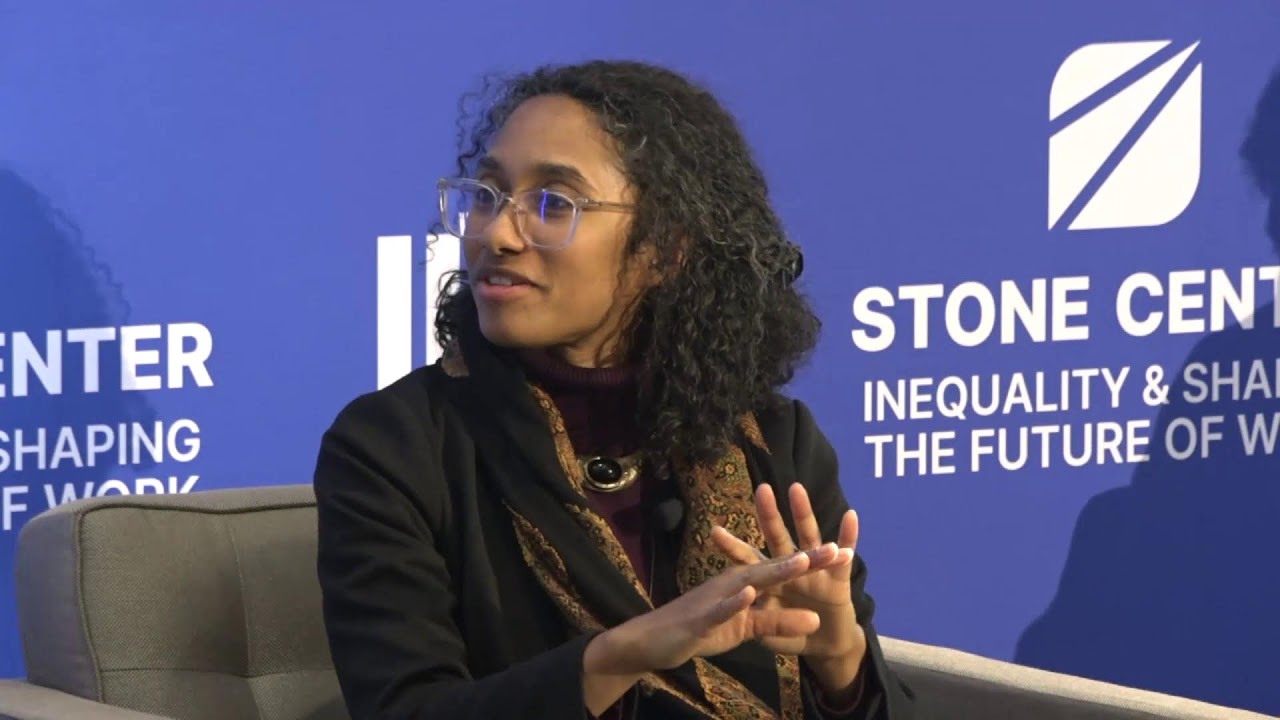
The symposium at MIT, introduced by Simon Johnson and Dean Richard Locke, focused on the critical issue of wealth inequality and its implications for society, democracy, and the economy. The Stone Center for Inequality and Shaping the Future of Work, recently launched at MIT, aims to analyze the forces driving income and wealth disparities, particularly through the erosion of job quality for workers without college degrees. The event brought together experts from various disciplines to explore why wealth inequality matters, especially in the context of emerging technologies like artificial intelligence, which may exacerbate existing disparities.
Ellen Londmore opened the discussion by emphasizing that wealth inequality need not inherently threaten democracy if political power remains equally distributed. Drawing on Michael Walzer’s theory of complex equality, she argued that problems arise when wealth translates into disproportionate political influence, leading to epistemic injustice where the experiences and voices of less wealthy citizens are marginalized. She highlighted historical Athenian democracy’s mechanisms, such as random selection and fiscal obligations on the wealthy, as potential models to mitigate these distortions. Londmore suggested reforms like citizen assemblies and fairer taxation to restore democratic balance.
Orin Cass provided a pragmatic perspective, critiquing mainstream economic views that downplay the political significance of inequality. He stressed that inequality matters deeply because it affects perceptions of fairness and the allocation of scarce resources, often privileging the wealthy regardless of societal value. Cass pointed to issues like inheritance and financialization as drivers of entrenched inequality and advocated for strengthening worker power and reconsidering the structure of the economy to foster mutual dependence between capital owners and workers, thereby supporting democratic capitalism.
Elizabeth Anderson focused on the immense power concentrated in the hands of a few corporate leaders and the consequences for democracy and workers. She traced the weakening of antitrust enforcement to legal doctrines that prioritize consumer interests over broader social concerns, enabling massive corporate wealth concentration. Anderson warned that unchecked corporate power undermines the rule of law and degrades work quality, especially with the rise of AI technologies aimed at maximizing shareholder value at workers’ expense. She called for vigorous antitrust enforcement and workplace democratization to address these challenges.
The second panel, introduced by Gary Gensler, delved into the complexities of measuring and addressing wealth inequality, with a focus on intergenerational and racial disparities. Voitchok Voychek discussed wealth as a multifaceted metric reflecting lifetime resources, consumption decisions, and inheritances, cautioning against simplistic interpretations. Laura Tach highlighted the persistent racial wealth gap in the U.S., rooted in historical injustices and ongoing unequal opportunities, suggesting bold policies like reparations to address these entrenched disparities. Sasha Buchert emphasized the intergenerational transmission of wealth and its role in perpetuating inequality, noting that both historical legacies and contemporary inequalities contribute to persistent wealth gaps. The panelists agreed that wealth inequality intersects with income inequality and political power, underscoring the need for comprehensive approaches to promote equity and democratic health.