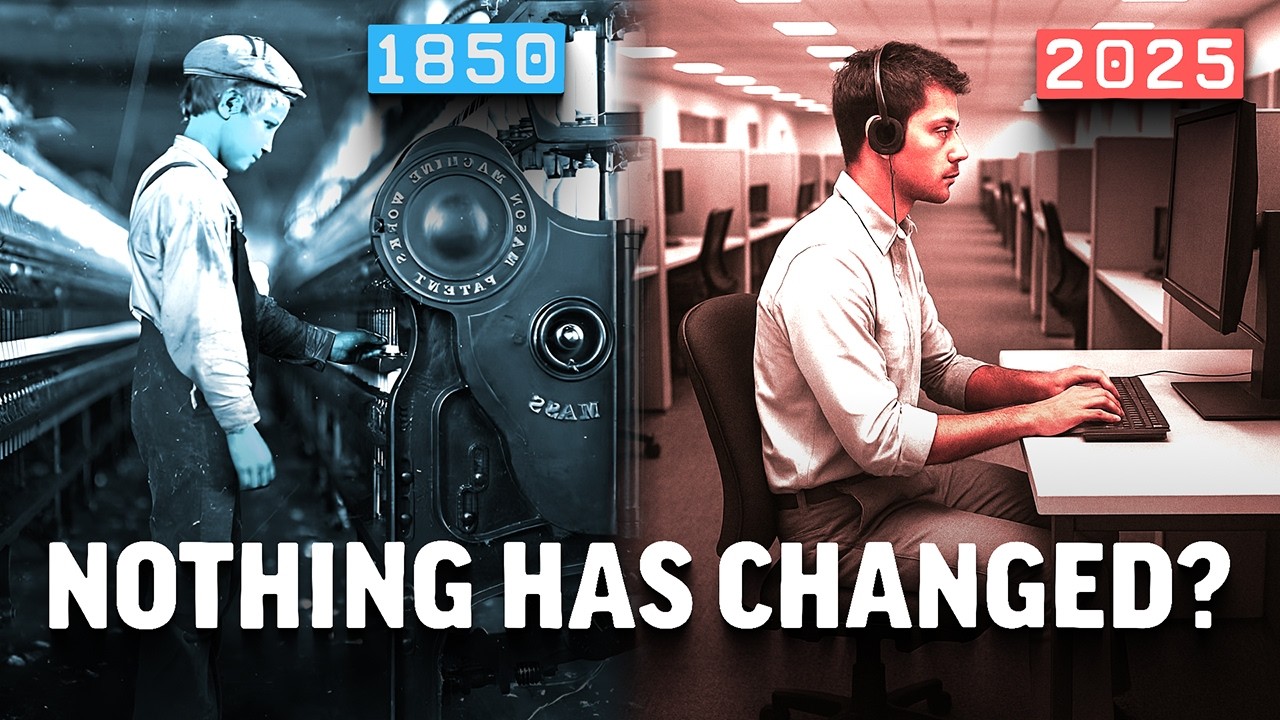
The video explores the fundamental problems with the current way work is organized in society, highlighting issues such as lack of job satisfaction, inequality, undemocratic workplaces, and inefficiency. The narrator criticizes the modern employment system, where workers rent themselves to companies and have little control or influence over their work environment. This system often leads to stress, burnout, and a sense of powerlessness, while also enabling oppressive monitoring technologies and totalitarian-like control in some workplaces. Despite these issues, the system remains largely unchanged since the Industrial Revolution, perpetuating aristocratic hierarchies and subordination.
Historically, work was more autonomous, with most people working for themselves as farmers, craftsmen, or merchants. The Industrial Revolution shifted this dynamic, creating large manufacturing aristocracies and a system of wage labor that many thinkers, from Tocqueville to Marx and Mill, have criticized for fostering inequality and dependency. This shift transformed workers into subordinate rent-renters rather than autonomous producers, leading to a society divided between owners and workers. Despite ongoing criticism, the employment model has persisted, spreading globally and becoming the dominant form of work organization.
The video identifies four key problems with the current system: job satisfaction, democracy, inequality, and inefficiency. Workers often experience low engagement and high stress due to limited control over their work. The lack of democratic participation in workplaces hampers moral and civic development, while the concentration of wealth among owners and top executives exacerbates inequality. Additionally, the division between owners and workers creates inefficiencies, as conflicting interests lead to underinvestment, slack, and a focus on short-term profits rather than long-term growth. These issues collectively undermine societal well-being and economic productivity.
As a solution, the video advocates for employee ownership and democratic companies, where workers have a stake and a say in the management of their workplaces. This model, which has historical roots and modern examples like Mondragon in Spain and ESOPs in the US, can address the problems of dissatisfaction, inequality, and inefficiency. Empirical research shows that employee-owned companies tend to outperform traditional firms, with higher productivity, lower turnover, and greater innovation. Promoting widespread employee ownership could also strengthen local communities and foster a more resilient economy, counteracting the destabilizing effects of globalization and absentee ownership.
Despite the clear benefits and growing interest in democratic ownership models, the current economic and political landscape favors traditional, non-democratic corporations. Lack of awareness, entrenched legal and institutional barriers, and resistance from powerful interests hinder the transition. The video emphasizes that change is possible and within reach, urging individuals and companies to start acting today—whether by adopting democratic practices or supporting policies that promote employee ownership. Ultimately, the message is that a more democratic, equitable, and efficient future of work is achievable if people are willing to challenge the status quo and take action.