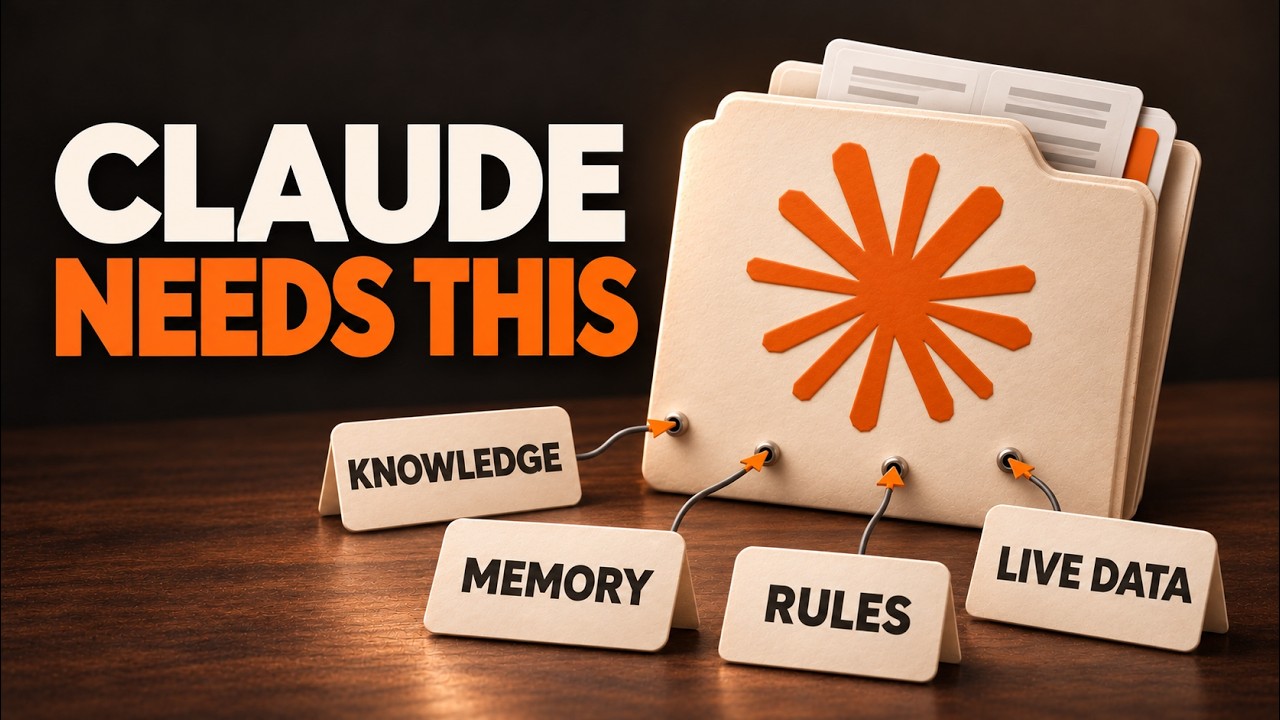
The video emphasizes the critical importance of providing clear and structured context when using AI models for business tasks. Without proper context, AI outputs tend to be mediocre because the model lacks understanding of the business, its goals, and preferences. Context is multifaceted, including business facts, voice and style preferences, rules, methodologies, and definitions. The speaker breaks down context into several components: task instructions (skills), knowledge (stored information), data (dynamic business data), memory (AI’s learned information), and working context (current conversation and tools). Understanding and organizing these components effectively is key to unlocking the full potential of AI.
Extracting and organizing context from existing resources is the next crucial step. This can be done by connecting AI to existing documentation, emails, Slack messages, and databases, or by having the AI interview users to gather information. Showing the AI examples of good work and maintaining a centralized, decoupled context repository—such as cloud storage or tools like GitHub or Notion—helps avoid fragmentation and ensures consistency. For teams, especially small ones, a cloud-first approach with role-based access control is recommended to maintain order and prevent unauthorized or conflicting changes.
The video also highlights the importance of managing dynamic business data and state, which reflect the current status of clients, invoices, and other operational details. This data should remain in its source systems (e.g., CRM, payment platforms) to serve as the single source of truth, while AI can access it live or through scheduled updates. Supplementing raw data with context maps or metadata helps AI interpret the meaning behind records, improving accuracy and relevance in responses. The speaker advises balancing live data queries with centralized repositories for long-term analysis and pattern recognition.
Regarding data storage and retrieval, the video distinguishes between databases for exact record lookup, search systems for finding specific passages, and wikis for aggregating and distilling accumulated knowledge. Retrieval-Augmented Generation (RAG) is explained as a hybrid approach combining semantic search in vector databases with exact keyword matching to improve answer accuracy. However, RAG is not always necessary, especially for solo founders or small businesses, where simple databases and context files may suffice. Wikis are useful when dealing with growing bodies of related information that require ongoing refinement.
Finally, the speaker stresses the need for continuous refinement and maintenance of AI context and memory. AI systems should be regularly reviewed to remove outdated or irrelevant information and to promote useful insights into formal knowledge or skills. For teams, changes to shared context must go through an approval process to avoid disruptions. The overarching recommendation is to “rent the AI” but “own the context,” meaning businesses should control and maintain their context layers and data while leveraging AI models. Scaling AI integration should be done thoughtfully and incrementally, focusing on real needs rather than hype.
Useful Links