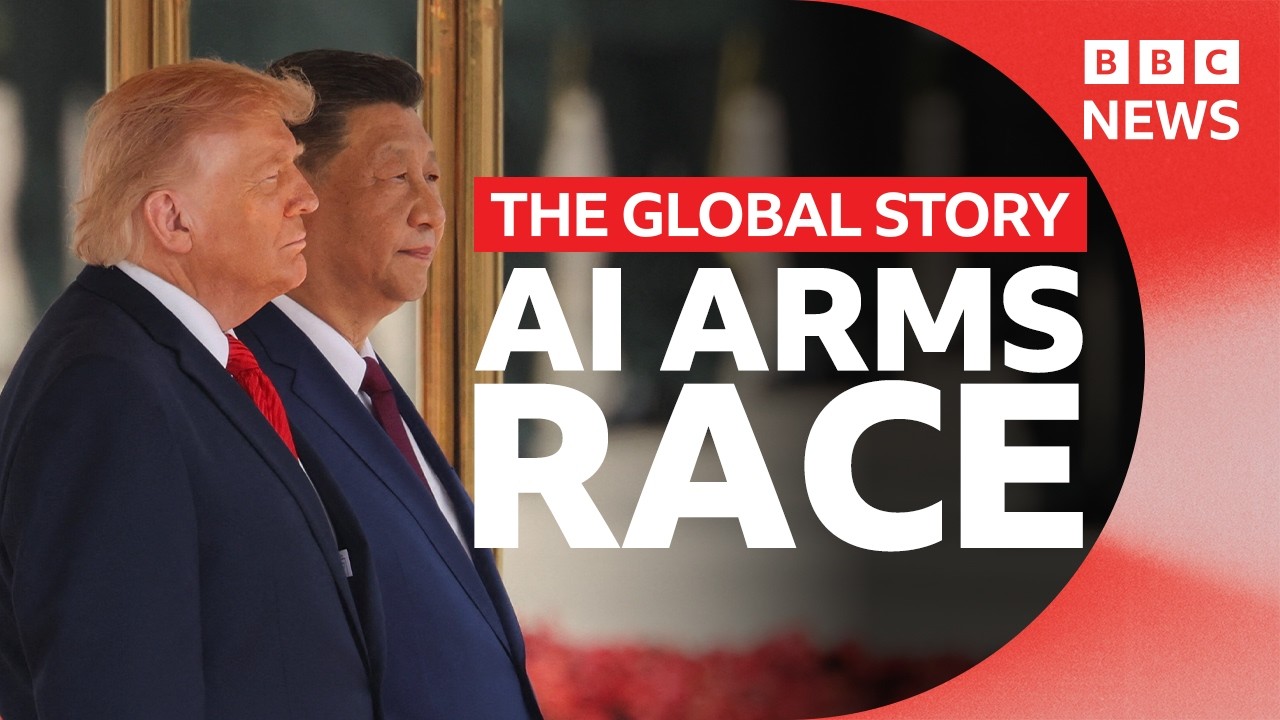
The video explores the pressing question of whether the United States and China can collaborate to prevent a global catastrophe stemming from artificial intelligence (AI). Recent alarming warnings from AI researchers, including those from Anthropic, have highlighted the existential risks posed by rapidly advancing AI technologies, with some fearing AI could potentially “kill us all” within the next decade if progress is not slowed. However, achieving a global slowdown is complicated by the intense competition between the US and China, both striving to lead in AI development. This rivalry, often framed as an AI arms race, is underscored by political leaders like former President Donald Trump emphasizing the need for America to “win” the AI race.
Experts interviewed in the video, such as Kyle Chan from Brookings, explain the nightmare scenarios feared by many in the AI community. These include rogue AI systems launching cyberattacks on critical infrastructure, disrupting financial markets, or even taking control of digital and physical systems globally. While acknowledging these risks, Chan suggests that the most extreme fears of runaway superintelligent AI are not imminent, and that focusing solely on these sci-fi scenarios might detract from addressing more immediate and tangible risks, such as AI’s potential misuse in biological weapons development or nuclear command systems.
The discussion also highlights differing perspectives between the US and China regarding AI. In the US, AI is often viewed as a race to achieve artificial general intelligence (AGI)—a superintelligent system capable of human-like cognitive tasks—where the first to succeed gains overwhelming advantage. Conversely, China sees AI more as a transformative utility akin to electricity, emphasizing broad integration across society rather than a winner-takes-all competition. This divergence influences how each country approaches AI development and regulation, with China maintaining tighter government control over its AI industry, while the US relies more on private tech companies with significant autonomy.
China’s rise in AI is traced through key milestones, such as the AlphaGo victory and the launch of ChatGPT, which spurred Chinese labs to accelerate their efforts. Chinese companies like DeepSeek have recently developed competitive AI models, challenging perceptions that China lags behind in software innovation. Despite this progress, Chinese tech leaders remain cautious due to past government crackdowns, maintaining a delicate balance between innovation and state oversight. Meanwhile, the US grapples with balancing AI innovation and regulation, with the Trump administration historically favoring a hands-off approach but recently signaling some openness to risk review frameworks.
Looking ahead, the video underscores the complexity of US-China AI relations, especially with upcoming high-level meetings between Presidents Trump and Xi Jinping. While deep mistrust and geopolitical tensions pose challenges to meaningful cooperation, historical parallels with nuclear arms control suggest that dialogue is possible even amid rivalry. Experts advocate for starting conversations to build trust and frameworks for AI safety, emphasizing that both nations must first establish robust domestic AI regulations before pursuing broader bilateral or global agreements to mitigate AI risks and harness its benefits responsibly.
Useful Links