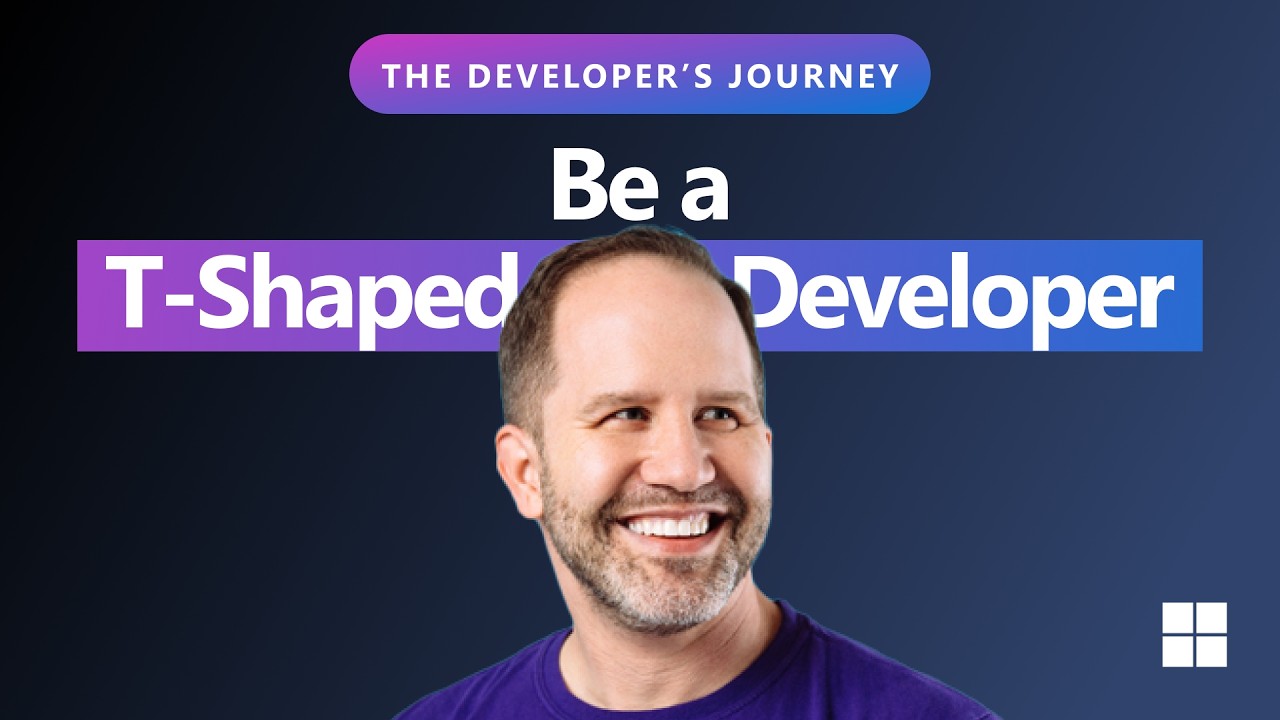
In this episode of The Developer’s Journey, Scott Hanselman, Vice President of Developer Community at Microsoft, shares insights from his 33-year career in software development. He emphasizes the importance of building a personal brand organically through consistent kindness and contribution rather than overthinking it. Scott highlights the vast majority of developers, whom he calls “dark matter developers,” who quietly ship software without seeking visibility or fame, underscoring the value of recognizing and appreciating these often unseen contributors in the tech ecosystem.
Scott advocates for a balanced approach to career development, recommending that developers become T-shaped professionals—specializing deeply in one or two areas while maintaining a broad understanding of other technologies. This blend of specialization and generalization provides flexibility and adaptability in a rapidly evolving industry. He encourages continuous learning and self-assessment, suggesting that teaching others is one of the most effective ways to deepen understanding and stay current with new technologies.
Addressing concerns about AI in software development, Scott views AI as a tool to handle dull, dangerous, and dirty tasks, freeing developers to focus on creative and engaging work. He warns against complacency and laziness, urging developers to use AI to enhance their skills rather than replace their effort. Scott stresses the importance of maintaining craftsmanship and creativity in coding, seeing AI as a power tool that should augment, not diminish, human contribution.
On non-technical skills, Scott highlights collaboration and a positive attitude as critical for career success. He advises developers to be pleasant, open to ideas, and supportive teammates, comparing this mindset to the improv principle of “yes, and.” He also discusses ageism in tech, acknowledging its existence but encouraging seasoned developers to leverage their experience alongside younger colleagues to build diverse and effective teams.
Finally, Scott shares his thoughts on remote work and the return-to-office debate, advocating for flexibility and a hybrid approach that balances in-person collaboration with remote accessibility. He emphasizes the value of physical presence for creativity and connection while recognizing the benefits of remote work for accessibility and work-life balance. Scott encourages remote workers to be intentional about their work environments and to cultivate human connections deliberately, ensuring productivity and well-being regardless of location.