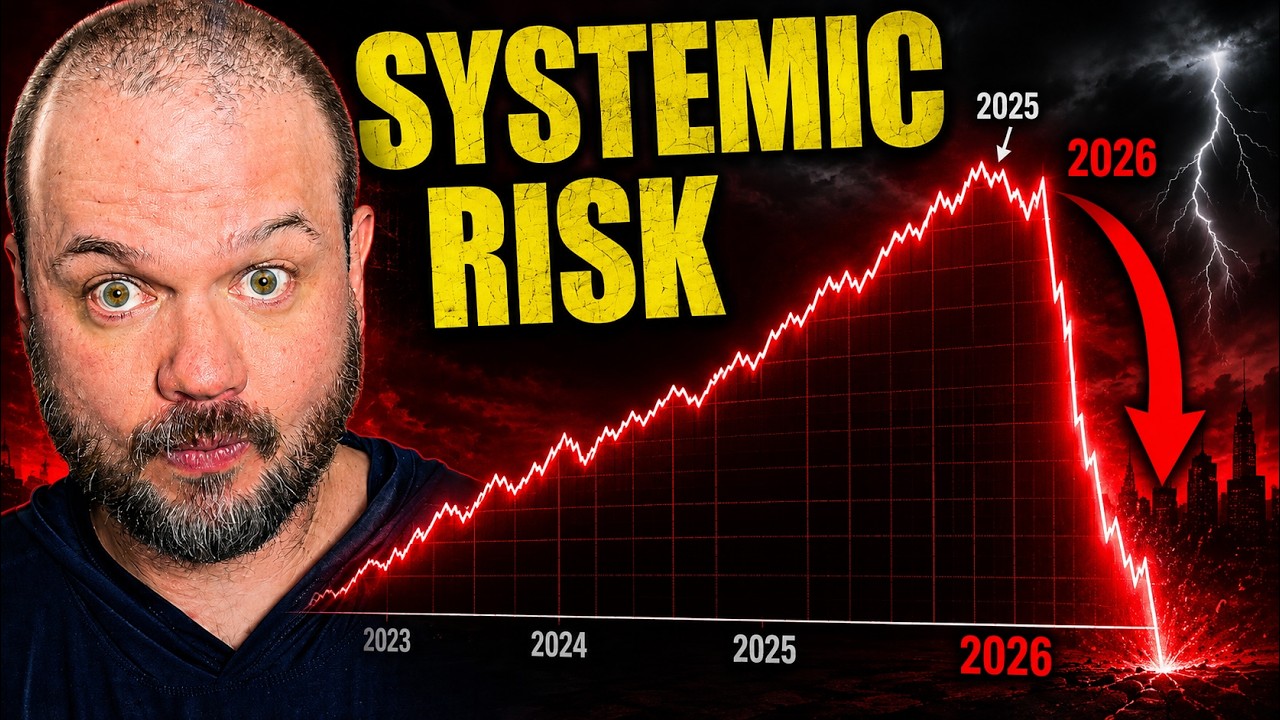
The International Monetary Fund (IMF) has issued a warning about a potential massive market shock driven by artificial intelligence (AI), particularly focusing on AI-fueled cyber attacks. The IMF, which oversees financial stability across 191 countries, highlights that AI tools like Claude Mythos and OpenAI’s GPT 5.5 could exploit vulnerabilities in major operating systems and web browsers, even by non-experts. This systemic risk could affect the entire financial system, triggering liquidity freezes, bank runs, and market meltdowns similar to the 2008 financial crisis. The concern is that AI could accelerate and amplify cyber threats, making the financial ecosystem more fragile.
A key issue raised is the concept of “skill compression,” where AI lowers the barrier for conducting sophisticated cyber attacks. Previously, exploiting vulnerabilities required highly skilled and expensive experts, but AI models now enable even individuals with limited technical knowledge to launch effective attacks. Additionally, the scale of attacks could increase dramatically, as AI agents can operate in parallel, attacking multiple targets simultaneously. This shift transforms cyber security from a niche technical problem into a widespread financial stability threat, with banks and payment infrastructures being particularly vulnerable.
The video also introduces Victor, an AI co-worker designed to assist teams by automating tasks within existing communication platforms like Slack and Microsoft Teams. Unlike traditional chatbots, Victor can execute complex workflows, gather data, and proactively suggest improvements, demonstrating how AI can be integrated into business operations effectively. This example contrasts with the darker side of AI discussed earlier, showing both the potential benefits and risks of AI technologies in the financial and corporate world.
High-level financial leaders, including the Canadian Finance Minister, Bank of England Governor, European Central Bank President, and CEOs of major banks like JP Morgan Chase and Goldman Sachs, have all expressed concern about AI-driven cyber risks. These warnings underscore that AI’s impact on financial stability is now a mainstream concern among policymakers and industry leaders. The financialization of AI risk means that AI capabilities are becoming a critical factor in economic planning, investment decisions, and regulatory frameworks, reflecting the interconnectedness of technology and global finance.
Finally, the video emphasizes that the danger lies not in a single super hacker but in the democratization of elite hacking skills through AI, potentially enabling thousands or tens of thousands of individuals worldwide to conduct sophisticated cyber attacks. This could lead to widespread uncertainty, market panic, and systemic shocks if multiple financial institutions are targeted simultaneously. While no immediate collapse is predicted, the IMF and other experts caution that AI-driven cyber threats could accelerate financial instability under certain conditions, making it a crucial issue for investors, businesses, and governments to monitor closely.