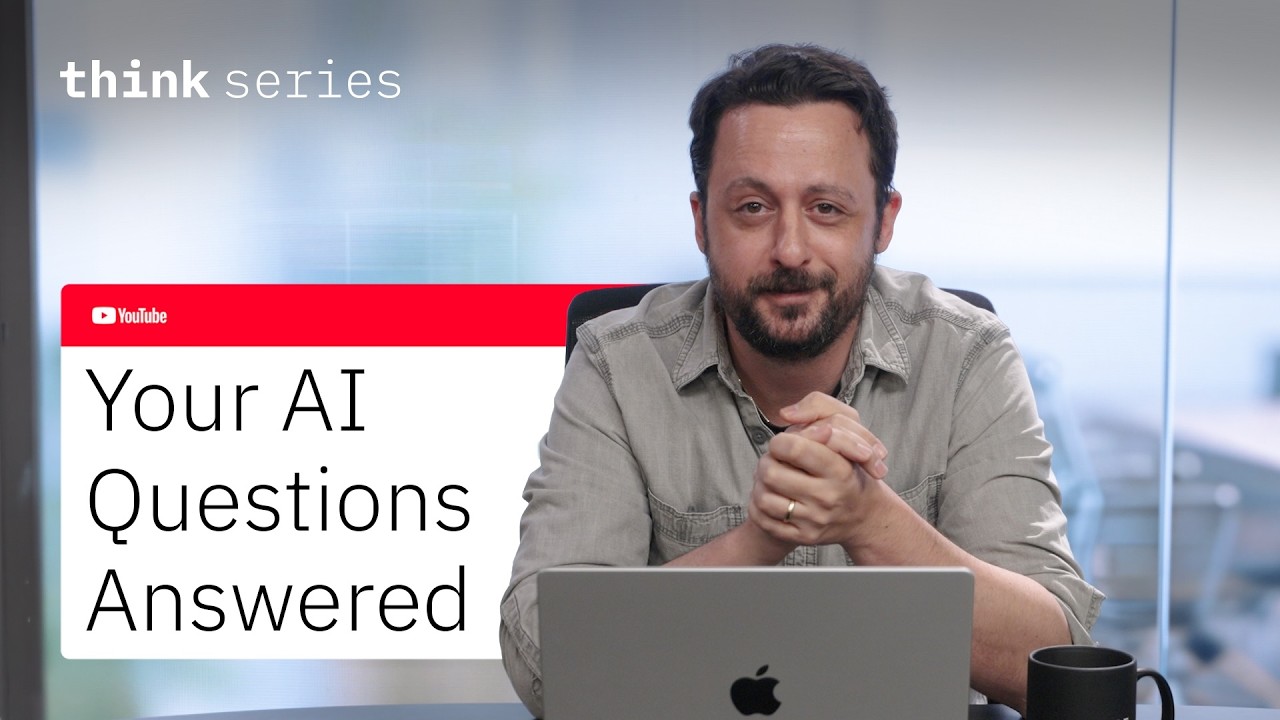
The video addresses a range of viewer questions about artificial intelligence, covering topics from AI’s role in dating to the technical aspects of running large language models (LLMs) locally. The host begins with a lighthearted discussion about whether AI can help people find love, joking about the prevalence of AI-generated dating profiles and the possibility of bots interacting with each other online. The advice given is to use AI for practical help, like finding a good bar or crafting conversation starters, but to prioritize real-life human connections.
Next, the video explores how AI is transforming the landscape of hacking and cybersecurity. The host references a recent, sophisticated hack involving Anthropic’s Claude Code, a coding agent, and highlights how AI tools are democratizing hacking by making advanced attacks accessible to people without elite technical skills. The conversation shifts to the broader issue of software quality, emphasizing that AI can expose vulnerabilities more efficiently than ever, and that defenders must now prepare for AI-driven attacks rather than just human adversaries.
The discussion then moves to creative applications of AI, particularly in text and music generation. The host admits to not using LLMs for creative writing personally, except for routine tasks like emails, but shares surprise at the quality of AI-generated music. This leads to a philosophical question about whether AI creativity is fundamentally different from human creativity, or if both are simply remixing existing patterns. The host concludes that the debate about true AI creativity is still unresolved.
The video also addresses the feasibility of running machine learning models locally. The host explains that with the right hardware, such as an RTX 3090 or 5090 GPU, it’s possible to run popular models like Llama, Mistral, and DeepSeek on a personal computer using tools like Ollama. However, running very large models or using outdated hardware is impractical. Ollama is praised for local development and prototyping, but the host cautions against using it in production environments, recommending industrial-grade inference engines like VLM for scalability and reliability.
Finally, the host clarifies the differences between MCP (Model Context Protocol), API, and A2A (Agent-to-Agent) communication in AI systems. APIs are described as the traditional, manual way of connecting tools, while MCP acts like a universal connector for AI tools, simplifying integration. A2A enables AI agents to communicate and collaborate autonomously. The host encourages viewers to experiment with these technologies, suggesting that hands-on experience is the best way to learn. The video ends with an invitation for viewers to submit more questions or share their own AI projects for future discussion.