The video challenges the common perception that Apple has lost the AI race, suggesting instead that Apple has been strategically positioning itself to leverage its massive iPhone user base and unique software ecosystem. While competitors like OpenAI and Anthropic face challenges in hardware deployment and enterprise traction, Apple is quietly preparing to integrate advanced AI capabilities into the iPhone, particularly through a revamped Siri experience. This new Siri will function more like a conversational AI similar to ChatGPT but deeply embedded across the iPhone’s interface, allowing users to interact with AI seamlessly from any app, thus enhancing ambient intelligence on the device.
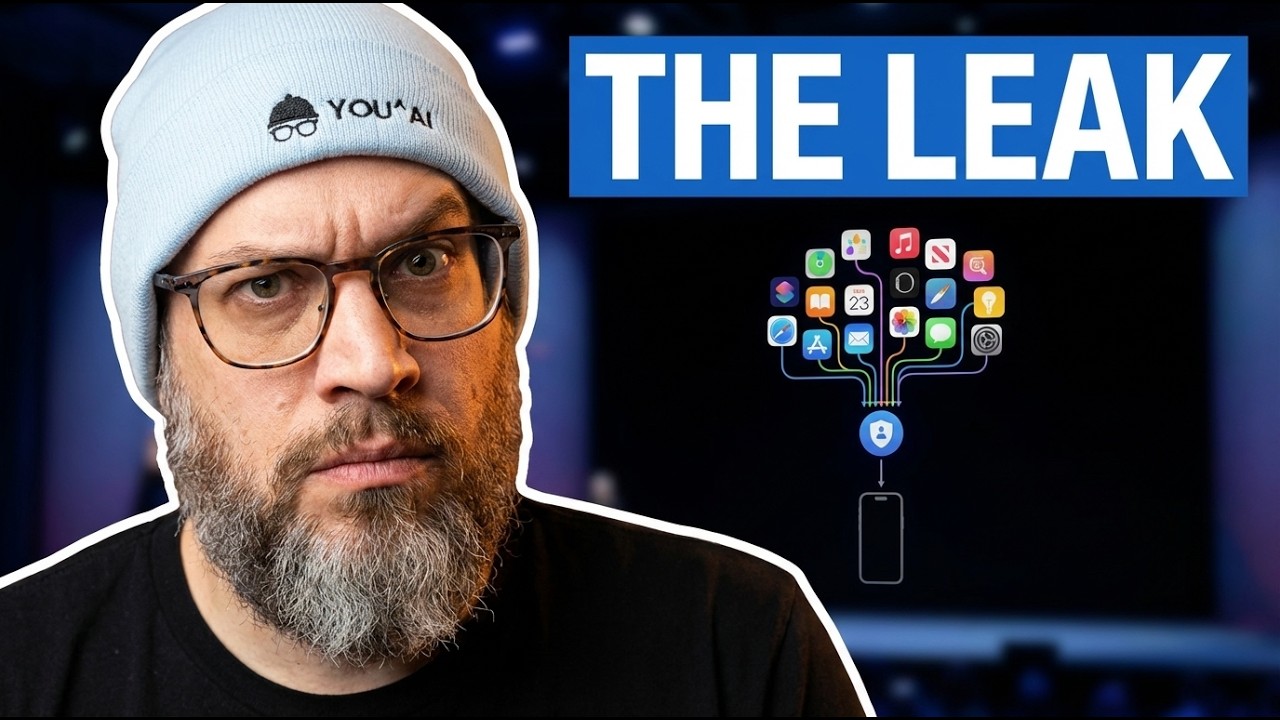
A key development highlighted is Apple’s introduction of “app intents,” a framework that will enable developers to integrate AI-driven commands and interactions directly into their apps. This will allow Siri to perform complex tasks such as price comparisons or photo editing through natural language requests, significantly differentiating apps on the iPhone. Apple is also opening up its ecosystem to support MCP (Model Control Protocol) integration, which will simplify how AI tools and agents communicate with apps, enhancing security and compatibility. This move signals Apple’s intent to make AI agentic capabilities a core part of the iPhone experience, accessible to a broad developer base but within a controlled, secure environment.
Apple’s partnership with Google for foundational large language models (LLMs) is another strategic element. Apple plans to run smaller, privacy-focused AI models locally on devices for sensitive tasks, while offloading more complex queries to Google’s cloud-based models. This hybrid approach balances privacy with advanced AI capabilities but also reflects Apple’s acceptance that it cannot yet compete with hyperscalers in building large-scale AI infrastructure. However, this reliance on Google’s models may limit some advanced multi-step AI workflows on the iPhone, potentially reserving those for more powerful devices like the Mac Mini.
Strategically, Apple aims to maintain control over the user interface by making Siri the default AI assistant for its 1.5 billion users, protecting the iPhone’s brand and ecosystem from being displaced by third-party AI solutions. Apple is also doubling down on its curated app ecosystem, favoring registered developers and rejecting more open, low-code or no-code “vibe coding” approaches due to security concerns. This controlled approach contrasts with competitors like Google, which have rapidly deployed AI features using more flexible but less integrated methods. Apple’s slower, more deliberate rollout reflects its traditional focus on seamless integration and user experience, though it faces pressure to deliver on its AI promises after previous delays.
For developers and users, the upcoming changes represent a significant opportunity and shift. Developers are encouraged to prepare for the new AI frameworks and rethink their apps to be agentic-first rather than simply adding chatbots as an overlay. For users, the era of delegation to AI agents is becoming mainstream, with AI expected to handle more complex tasks across devices. Ultimately, Apple’s AI strategy at WWDC is about securing its position in the evolving AI landscape by embedding intelligent agents deeply into the iPhone experience, ensuring the device remains aspirational and relevant in the agentic era.