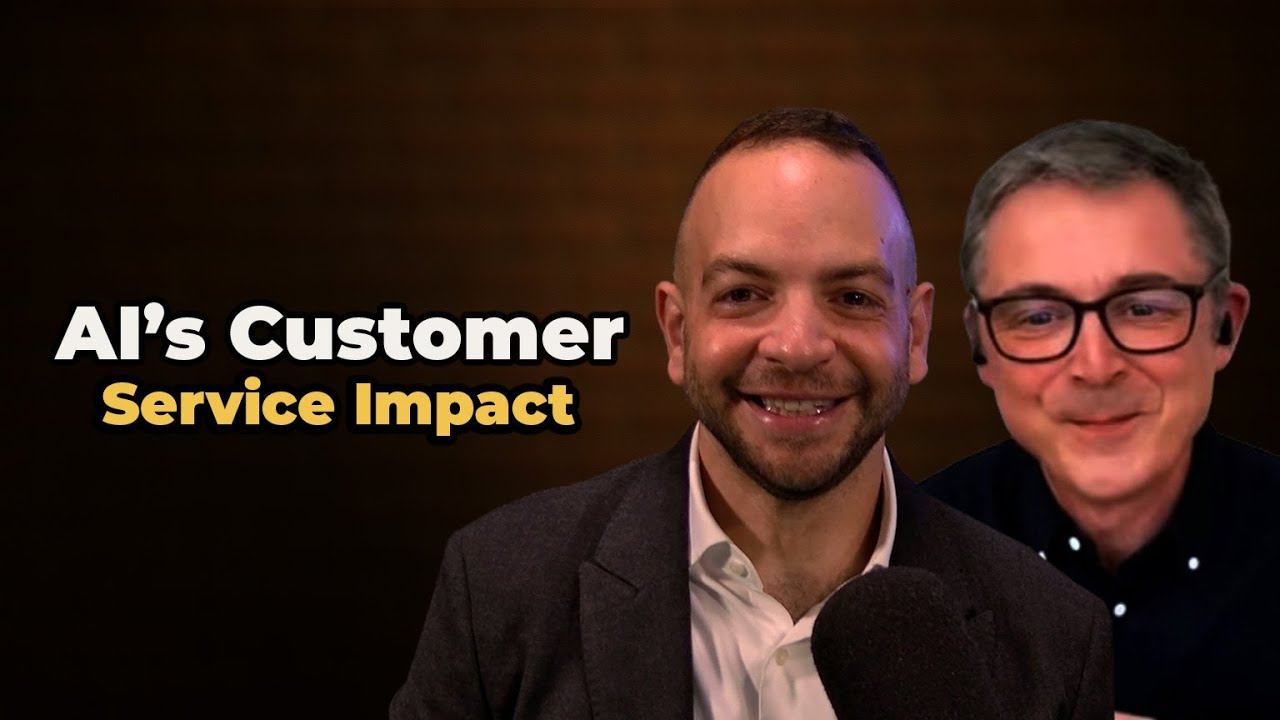
In this insightful conversation with Adrian McDermott, CTO of Zendesk, the transformative impact of AI on customer service is explored in depth. Adrian highlights the distinction between AI’s effects on software engineering versus customer service jobs. While AI boosts productivity in both fields, customer service roles face unique pressures due to the repetitive nature of many tasks, such as answering common queries like password resets. However, rather than outright job losses, AI enables upskilling and allows customer service teams to focus on higher-value interactions, improving customer experience and brand differentiation.
Adrian explains how AI adoption in customer service typically begins with generative search capabilities that handle a significant portion of inquiries by providing direct answers, reducing the need for customers to sift through multiple links. This is followed by co-pilot tools that assist human agents by lowering training burdens and increasing consistency. While AI agents that fully automate conversations are still gaining trust and require robust guardrails, the technology is rapidly evolving. The conversation also touches on the future of customer service interactions, suggesting a blend of brand-specific AI bots and broader platforms like ChatGPT, with human agents remaining essential for complex or emotionally charged cases.
The discussion delves into the current state of AI models used in customer service, noting that while incremental improvements continue, much of the foundational work over the past two years has focused on managing hallucinations and unpredictability. Zendesk employs advanced models, such as Claude, to monitor conversations and determine resolution status, illustrating the orchestration of multiple AI agents working together. Adrian agrees with the view that orchestration—integrating AI models with backend systems and workflows—is key to unlocking higher automation levels and delivering consistent, fast, and reliable customer service experiences.
When it comes to AI taking direct action, such as processing refunds or changing orders, Adrian emphasizes that the main barrier is not the AI’s capability but the underlying company infrastructure. Many organizations lack the necessary APIs or digital transformation maturity to enable seamless automation. However, advances in coding AI models are empowering developers to build integrations more efficiently, accelerating the path to higher automation. Voice-based AI customer service, while technologically feasible in terms of speech recognition and synthesis, still faces challenges related to latency, natural conversational flow, and emotional understanding, with mass adoption expected within the next year.
Finally, the conversation touches on the importance of memory and continual learning in AI for customer service. Currently, memory is simulated through summarizing recent interactions to provide context, but true persistent memory remains a frontier challenge crucial for creating personalized and effective AI agents. Continual learning, where AI improves from every interaction, is highly desirable but raises concerns about transparency and control. Adrian concludes that while AI is already delivering significant value in customer service today, ongoing advancements in orchestration, integration, memory, and learning will further revolutionize the field, making AI an indispensable partner in delivering exceptional customer experiences.