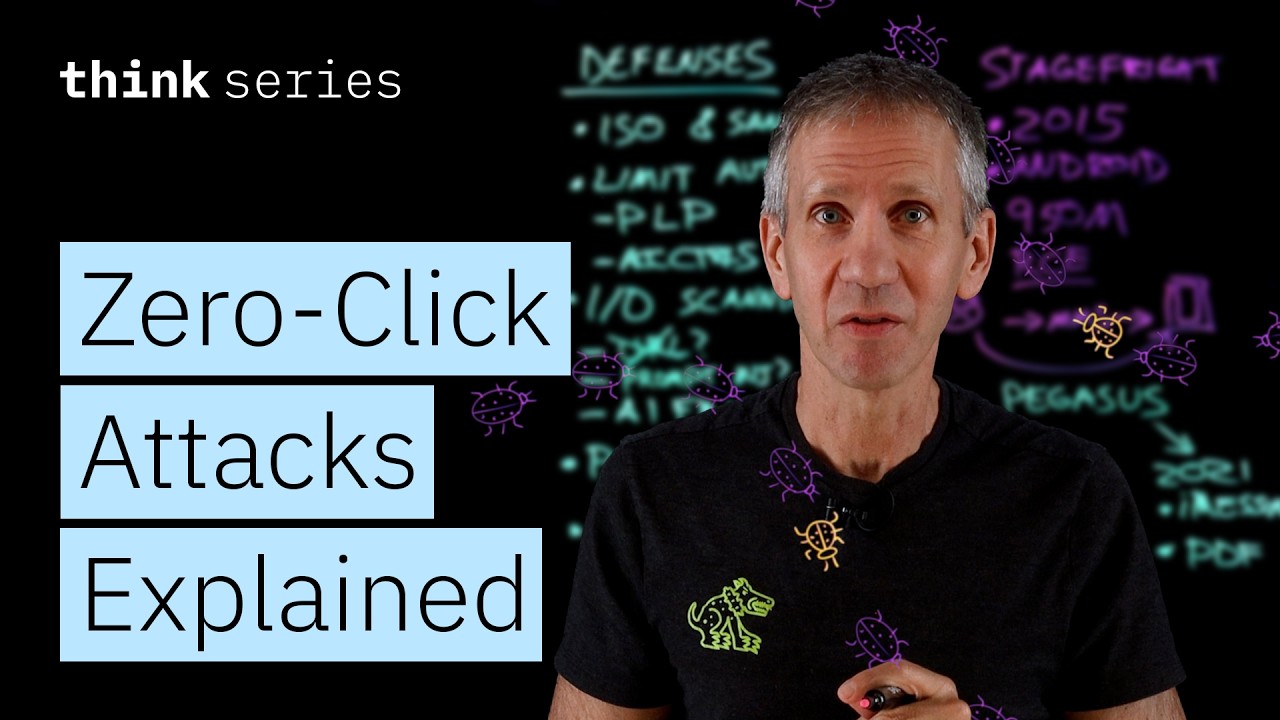
The video introduces the concept of zero-click attacks, a type of cyberattack where the victim does not need to take any action such as clicking a link or downloading a file for the attack to succeed. These attacks exploit vulnerabilities in software to execute malicious code remotely without user interaction. Historical examples include the 2015 Stagefright vulnerability affecting Android devices, where simply receiving a multimedia message could allow an attacker to run code on the device. Other notable cases involve spyware like Pegasus, which can remotely control devices, access cameras, microphones, messages, and keystrokes, with zero-click exploits targeting popular messaging platforms like WhatsApp and iMessage.
The core reason zero-click attacks are possible is that software inevitably contains bugs, some of which are security vulnerabilities that attackers exploit. These vulnerabilities can exist at the operating system level or within applications, affecting mobile devices, laptops, and desktops alike. The video emphasizes that no user action is required for these attacks to succeed, making them particularly dangerous and difficult to defend against through traditional user training or awareness.
The video then explores how AI agents, which are automated tools powered by large language models capable of browsing, summarizing, and executing commands autonomously, can amplify the risks associated with zero-click attacks. While AI can boost productivity by automating tasks, it can also act as a risk amplifier if not properly controlled. A highlighted example is the EchoLeak attack, where a malicious email containing hidden prompt injections tricks an AI agent like Microsoft 365 Copilot into exfiltrating sensitive corporate information without the user’s knowledge or involvement.
To defend against these evolving threats, the video recommends several strategies focused on limiting AI agents’ capabilities and exposure. These include sandboxing AI agents to restrict their access, applying the principle of least privilege to minimize what they can do, implementing strict access controls for AI identities, and scanning inputs and outputs for malicious content such as prompt injections. The concept of an AI firewall is introduced, which inspects incoming and outgoing data to block harmful commands or sensitive data leaks before they reach users or external attackers.
Finally, the video stresses the importance of keeping software up to date with patches to fix known vulnerabilities and adopting a zero-trust security model that assumes all incoming data is potentially hostile until verified. As AI agents become more autonomous, the attack surface for zero-click attacks will continue to grow, making vigilance essential. The key takeaway is to carefully monitor and control all inputs and outputs involving AI systems to prevent exploitation and data breaches.