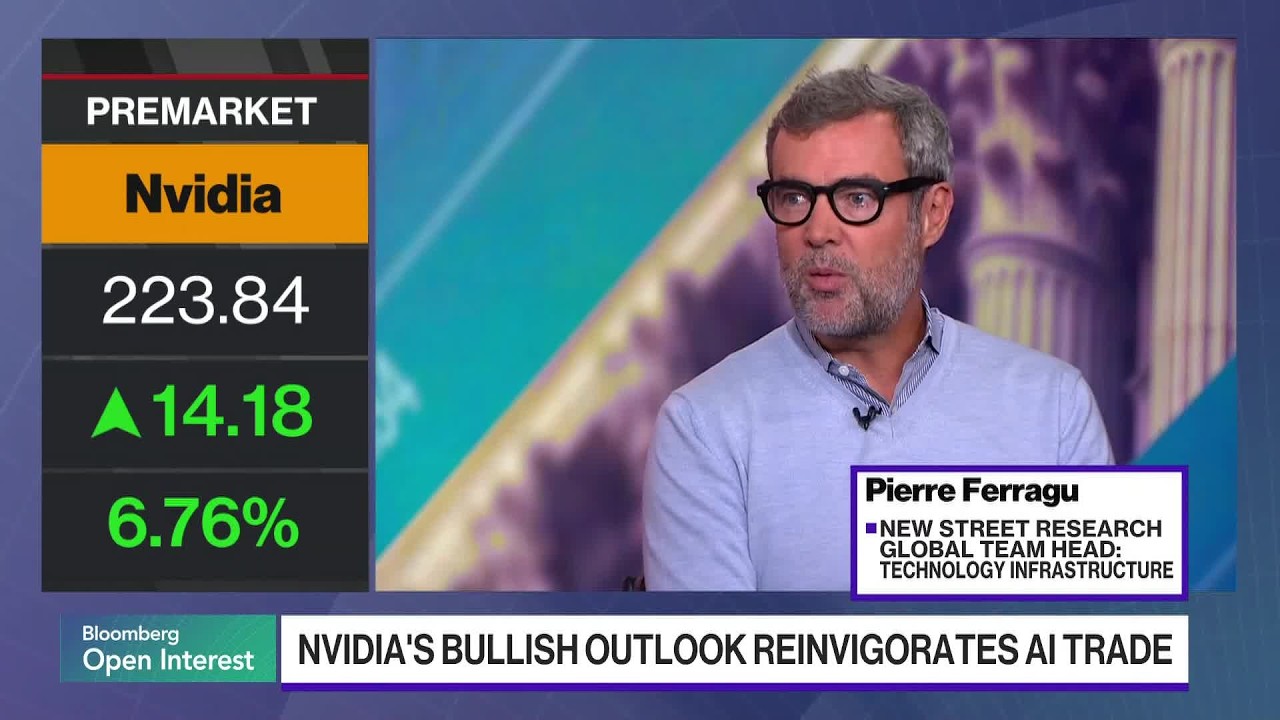
Nvidia projects an ambitious 70% growth driven by both large hyperscalers and a growing market of smaller, agile cloud users, despite supply chain constraints and opposition to data center expansions. The company’s strategy includes strengthening its supply chain and embracing open-source AI models to diversify revenue streams and capitalize on the expanding demand for AI infrastructure.
The discussion centers around Nvidia’s impressive guidance of 70% growth, which is notably high and supply-constrained. This guidance implies a substantial quarterly growth rate of about 15%, potentially leading Nvidia to reach an annualized revenue run rate of one trillion dollars by the end of next year. This ambitious target aligns with earlier hints from Nvidia’s CEO Jensen Huang regarding significant orders from major clients like Rubin and BlackRock. Despite these stellar results, there are cautious considerations, particularly around supply constraints and external factors such as opposition to data center expansions in the US.
Supply chain issues remain a primary concern, although Nvidia has consistently pushed the limits of its supply capabilities each quarter. The company’s recent financing efforts are largely aimed at strengthening the supply chain, which could help Nvidia exceed its already high growth targets. This financing strategy also serves to reassure investors and partners, ensuring that Nvidia can support data center deployments without relying heavily on hyperscalers who might develop competing chips. This approach helps Nvidia protect its ecosystem and maintain its market position.
Hyperscalers continue to be a significant driver of growth, with their capital expenditures expected to approach a trillion dollars next year. However, Nvidia is also expanding its focus to include the “neo cloud,” which consists of smaller, agile teams capable of rapidly deploying computing power. These smaller players now represent over half of the market, indicating a shift where hyperscalers, while still dominant, are gradually becoming a smaller portion of Nvidia’s overall customer base. This diversification could provide Nvidia with more stable and varied revenue streams.
An interesting dynamic highlighted is the decreasing cost of using AI models, which contrasts with the still high costs of building the underlying ecosystem due to supply constraints. While AI models and tokens are becoming cheaper and more accessible—similar to how transistor costs have plummeted over time—the demand for intelligence and computational power continues to grow exponentially. This growing demand ensures that overall spending on AI infrastructure remains robust despite the falling cost per unit of computation.
Finally, the conversation touches on the appeal of open-source AI models, which facilitate broader adoption, especially among smaller organizations that cannot develop their own chips. Open source lowers barriers to entry and encourages innovation, aligning with the idea that demand for intelligence is limitless. Nvidia’s strategy appears to embrace this trend, positioning itself to benefit from both large hyperscalers and a growing base of smaller, agile users who drive the future of AI deployment.