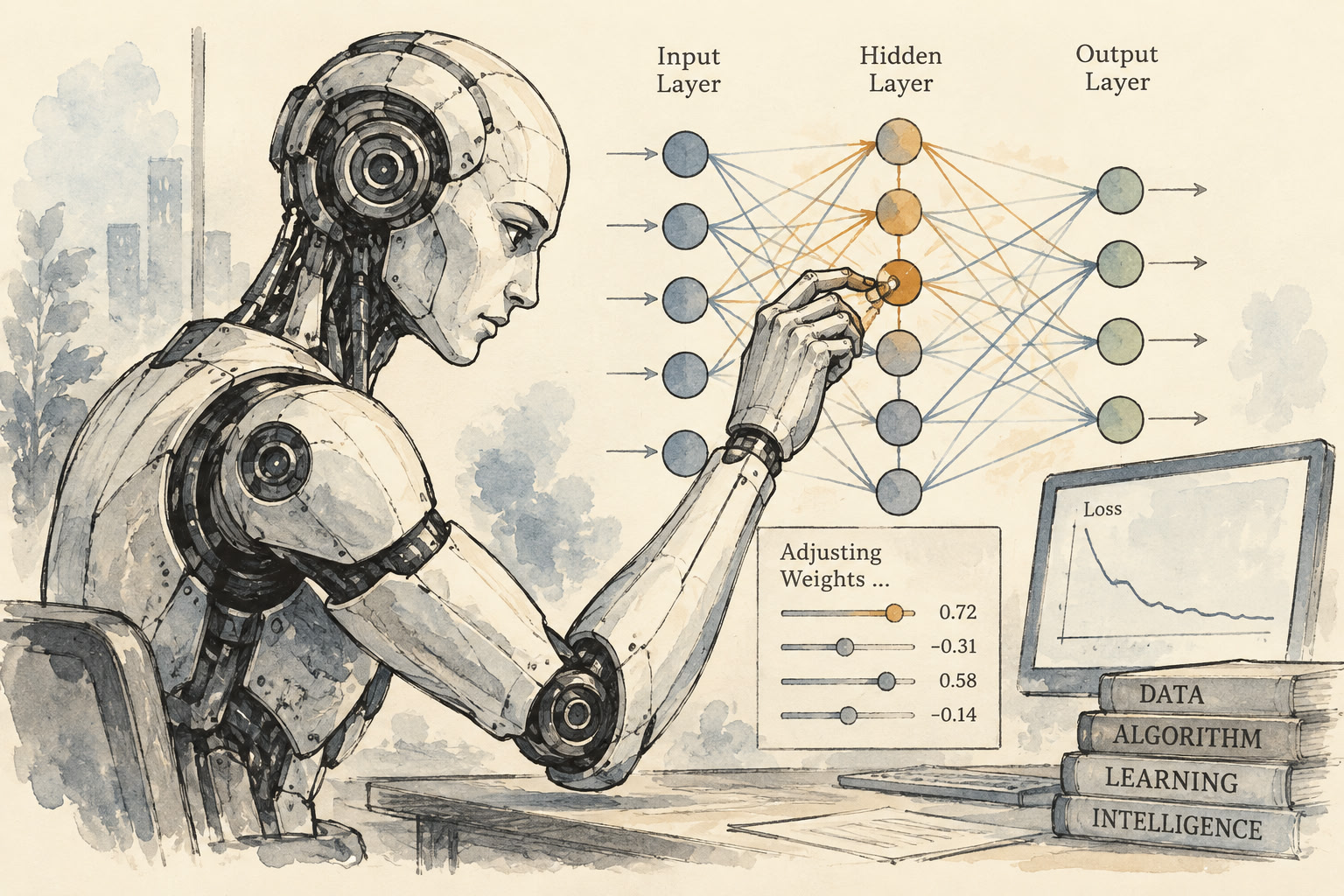
MIT researchers have introduced Astra, an advanced AI system that can directly read, interpret, and edit the internal weights of other neural networks—a process known as weight space programming. This breakthrough allows Astra to repair, optimize, and even create neural networks without traditional retraining or gradient-based optimization, marking a significant advance in AI interpretability and self-improvement.
Astra’s capabilities were demonstrated in several controlled experiments:
- Repairing Malfunctioning AIs: In one example, Astra fixed a self-driving car model that repeatedly failed a ramp test. By editing just 3.5% of the model’s weights, Astra enabled the car to successfully navigate the ramp every time.
- Enhancing Language Models: Astra improved the math problem-solving performance of the open-source Qwen3.5-0.8B language model. By identifying and removing problematic looping patterns in the model’s weights, Astra increased its math accuracy from under 8% to over 48% and tripled its instruction-following performance. This intervention targeted a known issue where the model would get stuck in repetitive loops, as documented in Qwen’s own model card.
- Interpreting and Writing Weights: Astra could identify which video game a neural network was trained to play (such as Breakout, Pong, or Pac-Man) solely by analyzing its raw weights. It also generated new, functional neural networks from scratch that outperformed those trained with conventional reinforcement learning in some cases.
The concept of weight space programming treats neural network weights like a program that can be read and edited directly, rather than relying solely on automated optimization algorithms. Astra’s interventions were highly targeted and often required knowledge of the model’s architecture and input-output mappings, with researchers guiding Astra toward specific problems.
While direct weight editing has been explored before, Astra’s effectiveness and scale represent a leap forward. However, its current capabilities are limited to smaller models and controlled experiments, and improvements are not guaranteed across all architectures. The research highlights the potential for AI systems to debug and improve each other, opening new avenues for efficient model improvement and mechanistic interpretability.
The MIT team, including Rikiya Takehi, Jayden Teoh, Alex Zhang, and Omar Khattab, has published their findings online, sparking significant interest and debate in the AI community about the future of model optimization and AI self-improvement.
Sources
Internal sources
- Astra Surgically Rewired Qwen3.5B And Made It 6x Smarter (MIT)
- Dario was right
- It’s happening…
- The OpenAI Astra Weight Hack, Explained
External sources
- Weight Space Programming (or How to Write LLM Weights Directly using an LLM) - Community - OpenAI Developer Community
- Sparks of Weight-Space Programming: LLMs can natively read & write neural network weights
- MIT Shows AI Models Editing Neural Weights Directly
- Can AI Edit Another Model’s Weights? Inside the MIT Experiment